


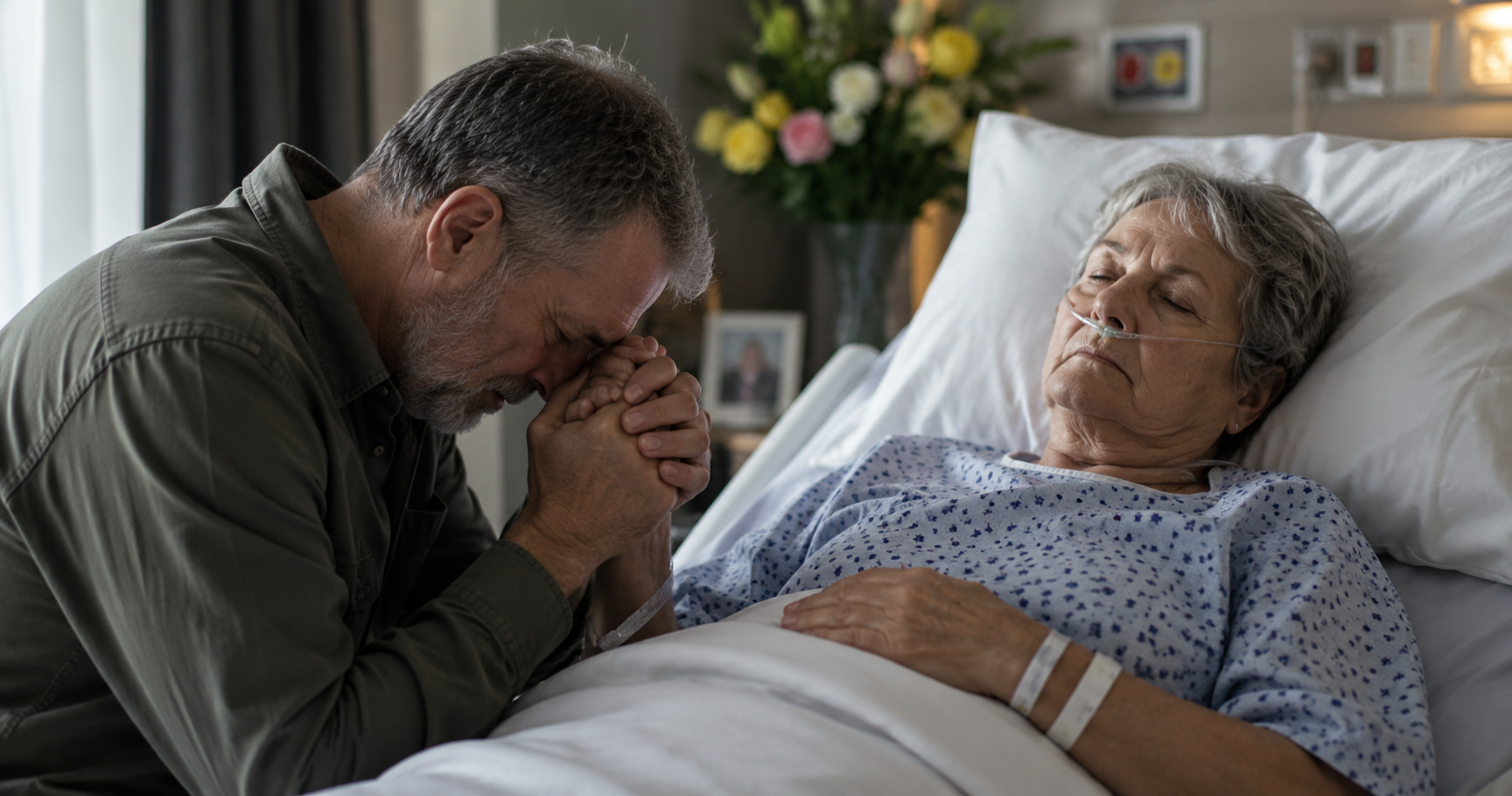
Praying & Healing for the Sick
Does oil do the healing? These and other questions will be addressed in this brief devotion.
1. The Need to Be Healed (James 5:13–14 ) – “Is any among you afflicted? let him pray. Is any merry? let him sing psalms. Is any sick among you? let him call for the elders of the church; and let them pray over him, anointing him with oil in the name of the Lord.”
Please note that there are two different words used for “sick.” The first word for “sick” (v. 14) is ἀσθενέω (as-then-eh’-o), which means to be diseased, weak, or ill. The next word, “sick” (v. 15), is κάμνω (kam’-no), which means weary, faint, or sick.
Again, look at the specific chronological order. First, let him pray. Second, let him call for the elders (πρεσβύτερος) of the church. This word means older and can indicate maturity. Third, anoint with oil. According to most scholars, this means to rub with oil. Even though oil was used in biblical times for healing, that is not the intention here. Another word in the Bible used for “anoint” means ceremonial anointing, which is not the meaning in this passage. Finally, we are instructed to anoint him in the name of the Lord.
2. The Need to Pray for Healing (James 5:15–16) – “And the prayer of faith shall save the sick, and the Lord shall raise him up; and if he have committed sins, they shall be forgiven him. Confess your faults one to another, and pray one for another, that ye may be healed. The effectual fervent prayer of a righteous man availeth much.”
Did you notice the God-given progression?
CONFESSION → INTERCESSION → RESTORATION
By the way, do not try to reverse the order.
Conclusion: Several final points need to be addressed. The prayer of faith is said to cure him. In other words, why pray if you don’t believe?
WARNING: If the person is not healed, it does not mean those praying did not have enough faith. Instead, it has to do with God’s will.
Lastly, the phrase, “if he have committed sins, they shall be forgiven him,” can be interpreted several ways. One, when Jesus saw the faith of the men who lowered the paralyzed man through the roof, He declared that his sins were forgiven. Two, according to both the psychological and medical world, physical sickness can sometimes be the result of sin or disobedience (see 1 Corinthians 5 and 11)*. Therefore, those sins would need to be forgiven in conjunction with their healing.
Hope this helps.